
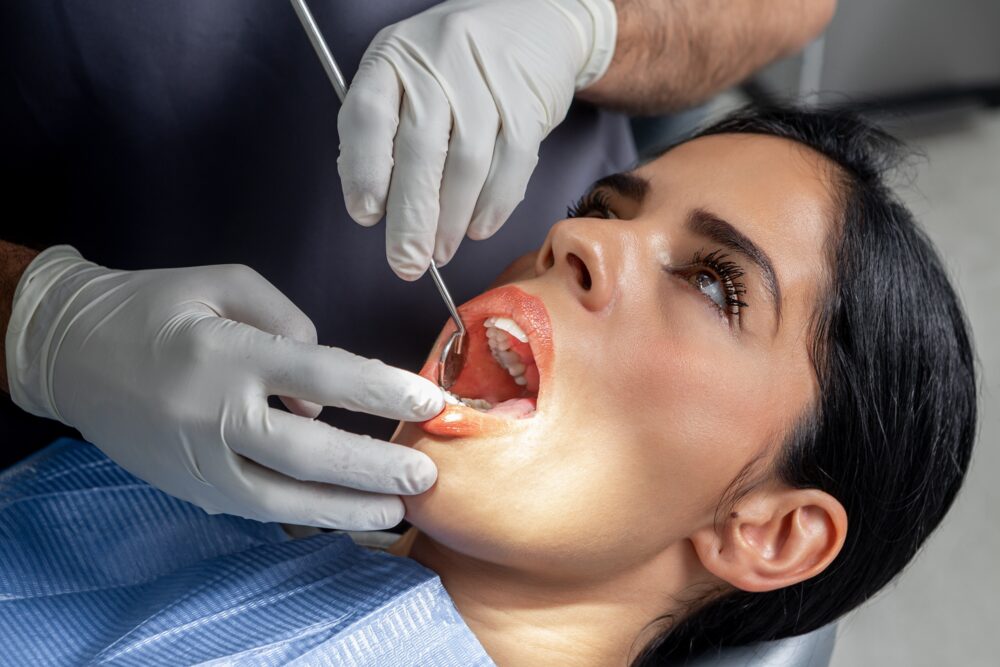
Most people judge their oral health by their teeth. If nothing hurts and your smile looks fine in the mirror, it is easy to assume everything is okay. But the real foundation of a healthy mouth is not your teeth — it is your gums.
Periodontal (gum) health determines whether your teeth stay stable, your breath stays fresh, and your risk for certain systemic diseases stays lower. When gums are inflamed or infected, problems often stay silent until they are advanced. By that point, you are looking at bone loss, loose teeth, and more complex treatment.
This post explains what healthy gums should look and feel like, how gum disease really starts, and what you can do in Highlands Ranch to protect your smile for the long term.
What Healthy Gums Look and Feel Like
Healthy gums are:
- Firm and pale pink (or naturally darker in some individuals)
- Snug around each tooth with no obvious gaps
- Free from swelling, puffiness, or shiny, overly smooth areas
- Not tender to the touch
- Not bleeding during normal brushing and flossing
If your gums bleed when you brush, look puffy, or feel sore, that is not “normal for you.” It is an early warning sign that inflammation is active below the surface.
For a deeper explanation of these early warning signs, review the earlier discussion on subtle symptoms that indicate you may need a checkup sooner than planned.
How Gum Disease Starts (And Why It Often Goes Ignored)
Gum disease usually develops in stages:
- Plaque buildup
A sticky film of bacteria collects along the gumline. Daily brushing and flossing remove most of it, but missed areas accumulate. - Tartar formation
Plaque that sits too long hardens into tartar (calculus). You cannot remove tartar at home; it requires professional instruments. - Gingivitis
Gums become inflamed and may bleed easily. At this stage, damage is still reversible with professional cleanings and improved home care. - Periodontitis
Inflammation extends deeper, attacking the bone that supports your teeth. Pockets form between teeth and gums, and bone loss begins. Damage at this stage is not reversible — it can only be managed.
This progression is often painless until bone loss is significant. That is why structured periodontal care, including targeted maintenance cleanings, matters even if you do not feel pain.
For a focused overview on this, see the article on maintaining healthy gums with periodontal treatments.
Why Periodontal Health Affects More Than Your Smile
Chronic gum inflammation does not stay neatly contained in your mouth. Bacteria and inflammatory markers can enter the bloodstream and interact with other systems in the body.
Research has linked periodontal disease with:
- Higher risk of heart disease and stroke
- More difficult blood sugar control in people with diabetes
- Increased risk of certain pregnancy complications
- Potential links with respiratory and inflammatory conditions
Healthy gums reduce one more source of chronic inflammation your body has to fight. This is also why regular oral cancer screenings and careful evaluation of oral tissues are part of a complete periodontal strategy. To understand how Twiss Dental approaches early detection, read about the importance of regular oral cancer screenings.
Everyday Habits That Protect Your Gums
You do not need an elaborate routine to support periodontal health. You need consistency and correct technique.
Key habits:
- Brush twice daily for two full minutes
Use a soft-bristled brush and small circular motions angled toward the gumline. - Floss or use interdental cleaners once daily
The goal is to wipe plaque off the side of each tooth, not just snap floss between contacts. - Use fluoride toothpaste
It strengthens enamel around the gumline, where decay and erosion often start. - Consider an electric toothbrush
Many patients find it easier to maintain consistent pressure and coverage. - Stay hydrated
Dry mouth increases the risk of decay and gum problems. Water helps wash away food particles and bacteria.
These habits work best as a complement to professional periodontal care, not as a replacement.
Professional Periodontal Care in Highlands Ranch
Home care controls daily bacterial buildup, but only professional care can:
- Remove hardened tartar below the gumline
- Measure pocket depths to monitor disease activity
- Identify early tissue changes you cannot see yourself
- Customize a maintenance interval based on your actual risk
At Twiss Dental in Highlands Ranch, periodontal care is not a one-size-fits-all cleaning. Your gum health is systematically evaluated, and treatment is tailored to your current condition — whether that means routine preventive cleanings or more advanced periodontal therapy.
To see how gum care fits into the broader picture of your oral health, review the full range of dental services offered at Twiss Dental.
When You Should Not Wait to Get Your Gums Checked
Move your periodontal evaluation up on the calendar if you notice:
- Gums that bleed regularly when you brush or floss
- Bad breath that does not improve with normal hygiene
- Gums that look red, shiny, or puffy
- Teeth that look longer due to receding gums
- New spaces or food getting trapped between teeth
- A change in how your teeth fit together when you bite
These are not minor annoyances; they are measurable signs of active inflammation.
If it has been more than six months since your last exam and cleaning — or if you have been treated for gum disease in the past — do not wait for pain. Use these signs as a prompt to schedule a periodontal checkup and keep your foundation healthy.
For many patients, combining targeted periodontal therapy with other restorative and cosmetic options provides the best long-term result. You can explore how gum health supports broader treatment goals in Twiss Dental’s post on restorative dentistry and repairing your smile.
The Bottom Line: Protect the Foundation First
Teeth, restorations, and cosmetic enhancements all depend on one thing: stable, healthy gums and bone. Periodontal care is not “extra”; it is the base that makes every other aspect of your smile possible.
If you are seeing subtle signs of inflammation or cannot remember your last thorough gum evaluation, treat that as a clear signal. A structured periodontal visit in Highlands Ranch now is far simpler than trying to rebuild lost support later.